

Professional wrestling means something different depending on where in the world you’re watching it, from the scripted spectacle of American sports entertainment to the centuries-old ritual combat still practiced in Japan. Fans searching for answers about pay, training, appearance, and health often find conflicting information scattered across forums and outdated articles. This guide breaks down the most common questions about wrestlers, both WWE superstars and traditional sumo athletes, with straightforward answers grounded in how these two very different worlds actually operate. For fans who enjoy following sports and entertainment coverage more broadly, win win offers a hub worth checking out alongside these insights.
How Much Do WWE Wrestlers Make: Breaking Down the Pay Scale
The honest answer to how much do wwe wrestlers make is that it depends enormously on roster position. Entry-level developmental talent often earns in the range of $60,000 to $80,000 annually, a modest figure given the physical demands of the job.
Main event stars occupy an entirely different financial universe, with top earners pulling in anywhere from several million to well over ten million dollars annually once merchandise royalties, appearance bonuses, and endorsement deals get factored into total compensation.
The gap between these tiers is stark. Average roster-wide compensation often gets skewed dramatically upward by a handful of elite performers, meaning median pay sits far below whatever headline figures circulate for the company’s biggest stars.
Understanding WWE’s Independent Contractor Pay Structure
WWE wrestlers technically operate as independent contractors rather than traditional employees, a classification that shapes how compensation actually works behind the scenes.
This arrangement means performers cover their own travel costs and taxes, while WWE provides guaranteed base contracts, often called downside guarantees, representing the minimum a wrestler earns regardless of how frequently they appear on programming.
Additional income streams stack on top of these guarantees, including pay-per-view bonuses, merchandise revenue sharing, and licensing fees from video games, all of which can dramatically boost total earnings for popular performers.
What Do Wrestlers Wear: Gear, Function, and Character Design
Answering what do wrestlers wear requires separating WWE’s entertainment-driven costuming from sumo’s strictly regulated traditional attire, since the two disciplines approach ring gear from completely different philosophies.
WWE performers wear character-specific outfits designed for visual impact and brand identity. Trunks, tights, boots, and accessories are chosen to reinforce a wrestler’s persona, whether that means flashy sequins for a showman or minimalist black gear for a more grounded character. Durability matters too, since gear must withstand repeated physical contact without tearing mid-match.
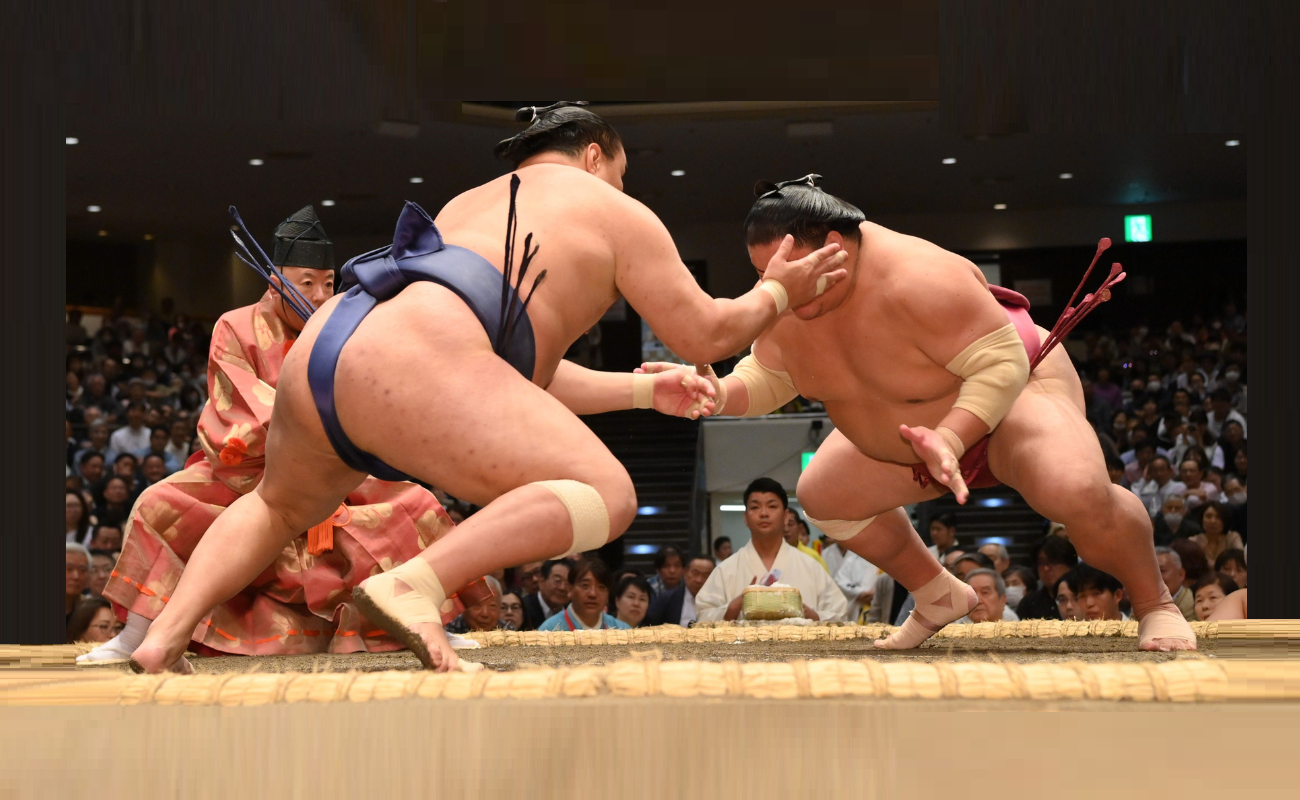
Sumo, by contrast, mandates a mawashi, a thick belt wrapped multiple times around the waist and between the legs, with color and fabric quality strictly tied to rank within the sport’s hierarchy.
How Much Do Sumo Wrestlers Make: Japan’s Rank-Based Pay System
Unlike WWE’s individually negotiated contracts, how much do sumo wrestlers make depends almost entirely on standardized rank rather than personal popularity or negotiating leverage, since the Japan Sumo Association sets pay by division.
Only wrestlers who reach the top two divisions, juryo and makuuchi, receive a fixed monthly salary at all. Lower-ranked wrestlers survive on modest per-tournament allowances while their stable covers food and housing costs.
Reaching yokozuna, sumo’s highest rank, brings a monthly salary equivalent to roughly twenty thousand dollars, translating to annual base pay near two hundred forty thousand dollars before bonuses, sponsorship money, and championship prizes are added.
The Financial Cliff Below Sumo’s Top Divisions
What makes sumo’s pay structure particularly unusual is the dramatic drop-off just below the salaried ranks, where a wrestler demoted even slightly can lose guaranteed income entirely overnight.
A juryo-ranked wrestler earning a comfortable salary can fall to makushita rank after a single poor tournament, instantly losing that fixed monthly payment and reverting to a modest stipend covering only basic living expenses.
This all-or-nothing structure creates intense pressure around each of the six annual tournaments, since consecutive losing records can erase years of career progress within a matter of weeks.
Prize Money, Sponsorships, and Hidden Income Streams
Beyond base salary, sumo wrestlers earn through kensho-kin, sponsor money attached to specific bouts, along with tournament championship prizes that have grown substantially in recent years to help offset inflation.
Winning the top division championship now brings a prize approaching thirty million yen, alongside additional special awards for outstanding performance, fighting spirit, or technical skill that can add several million yen more to a single tournament’s earnings.
A unique bonus system called kinboshi rewards lower-ranked wrestlers who defeat a yokozuna, adding a permanent, modest increase to their bonus pay for every remaining tournament of their career.
Are Sumo Wrestlers Healthy: Examining the Body Composition Debate
The question of are sumo wrestlers healthy invites more nuance than a simple yes or no, since these athletes carry substantial body fat alongside genuinely elite muscle mass and cardiovascular training built through daily competition.
Researchers studying rikishi have observed a pattern sometimes described as healthy obesity, where high physical activity levels partially offset some risks typically associated with elevated body fat, though metabolic markers often still exceed standard reference ranges.
This doesn’t mean the sport carries no health concerns. Joint stress, cardiovascular strain, and complications tied to rapid weight gain during training years remain genuine long-term considerations that former wrestlers and sports physicians continue studying closely.
Why Are Sumo Wrestlers Fat: The Purpose Behind Their Size
Understanding why are sumo wrestlers fat starts with the sport’s fundamental physics, since size and mass provide a genuine competitive advantage in a discipline built around pushing, throwing, and destabilizing an opponent within a small ring.
Chanko nabe, a protein-rich hotpot eaten in large quantities, forms the caloric foundation for this deliberate weight gain, combined with intense training schedules and a unique practice of napping after meals to encourage fat storage.
This isn’t undisciplined eating, though. Stables carefully manage diet and training as a calculated system designed to build both mass and functional strength simultaneously, since pure fat without underlying power provides little competitive benefit in actual bouts.
Life Inside a Sumo Stable: Training and Daily Structure
Every professional sumo wrestler belongs to a heya, or stable, where they live communally under a strict daily schedule built around early-morning training sessions conducted on empty stomachs.
This training-before-eating approach is itself intentional, designed to maximize caloric absorption and weight gain once the substantial midday meal finally arrives after hours of intense physical exertion on the practice dohyo.
Hierarchy within the stable governs nearly every aspect of daily life, from who eats first to who handles cooking and cleaning duties, with junior wrestlers serving senior sekitori until they themselves climb the ranking system.
WWE Training and Physical Preparation Compared
WWE performers follow an entirely different physical preparation model, emphasizing strength training, cardiovascular conditioning, and in-ring technique designed for both athleticism and storytelling through physical performance.
Unlike sumo’s mass-focused approach, WWE talent typically trains toward lean muscle definition suited for television presentation, since visual aesthetics play a significant role in character marketability and merchandise sales potential.
Injury prevention training has become increasingly emphasized industry-wide, reflecting growing awareness of the long-term physical toll that years of scripted physical performance can take on joints, spines, and cardiovascular health.
Career Longevity and Retirement Considerations
Sumo careers typically wind down by a wrestler’s early thirties, as cumulative injuries from repeated high-impact collisions gradually erode the explosive power needed to compete against younger opponents.
WWE careers vary more widely, with some performers competing into their forties or fifties depending on role, injury history, and whether they transition into part-time or legacy appearance schedules rather than full-time competition.
Both paths require careful financial planning, since sumo’s retirement fund system and WWE’s contract structures differ substantially in how they support athletes once their competitive careers conclude.
Cultural Significance Beyond the Paycheck
Sumo carries deep religious and cultural weight in Japan, rooted in Shinto ritual, making it something closer to a national institution than a conventional professional sport built purely around entertainment value.
WWE, by contrast, operates explicitly as scripted entertainment, blending athletic performance with theatrical storytelling designed to build long-term audience investment in characters, rivalries, and season-long narrative arcs across weekly programming.
These differing purposes shape everything from pay structure to public perception, explaining why comparing the two disciplines directly, while informative, ultimately requires appreciating how differently each culture defines what a wrestler actually is.
Final Thoughts on Two Distinct Wrestling Worlds
Both professional wrestling traditions demand extraordinary physical sacrifice, whether through the choreographed impact absorbed by WWE performers or the deliberate mass-building and joint stress that defines a sumo career from apprenticeship through retirement.
Understanding the financial realities, physical demands, and cultural context behind each discipline offers a fuller picture than surface-level comparisons typically provide, revealing two athletic traditions built around fundamentally different values and expectations.
