

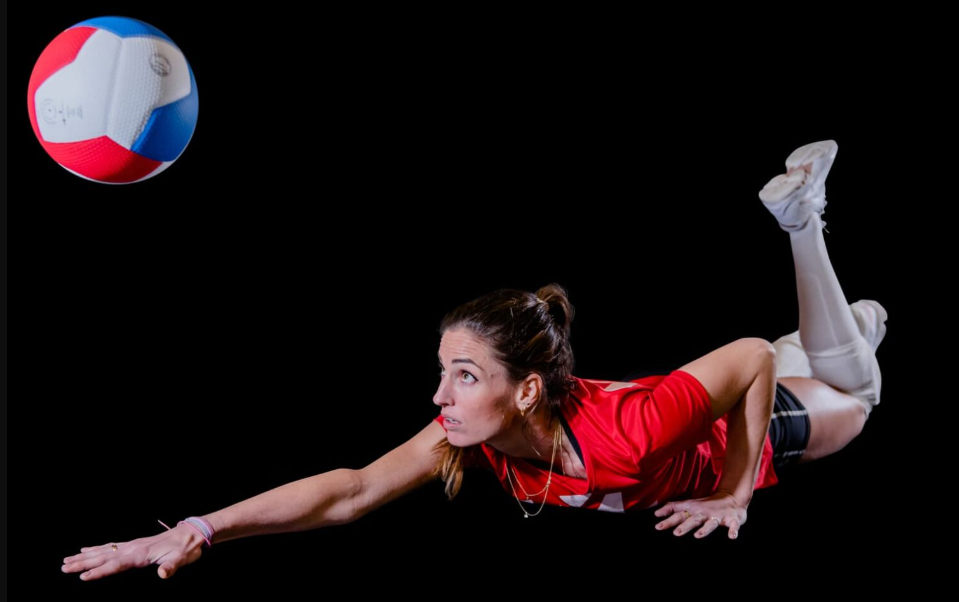
Understanding how a volleyball team functions on the court requires more than just knowing the basic rules, since each of the six players occupies a specialized role that shapes both offensive strategy and defensive structure throughout a match. Newcomers to the sport often find themselves confused watching players rotate and swap responsibilities, unsure why certain athletes never attack while others rarely touch the ball defensively. Fans wanting to follow match coverage and results can check the latest updates at db bet, where volleyball action stays current throughout competitive seasons.
Understanding Volleyball as a Team Sport Built on Specialization
Volleyball distinguishes itself from many team sports through its rigid positional specialization, where six players simultaneously occupy the court, each contributing distinct skills that rarely overlap significantly with teammates playing different assigned roles.
This specialization developed gradually as competitive volleyball evolved, with coaches recognizing that dedicated position-specific training produced considerably better results than expecting every player to develop equal proficiency across all court responsibilities.
Modern volleyball’s tactical complexity stems directly from this specialization, since successful teams require seamless coordination between attackers, setters, and defensive specialists who each bring genuinely different skill sets to every point played.
Breaking Down the Core Volleyball Positions on Court
Understanding volleyball positions on court starts with recognizing six fundamental roles: setter, outside hitter, opposite hitter, middle blocker, libero, and defensive specialist, each carrying distinct tactical responsibilities during active play.
These positions aren’t arbitrary labels either, since each role demands specific physical attributes and skill development, from the explosive vertical jumping required of middle blockers to the precise ball-handling touch essential for effective setters.
Team formations typically deploy these positions in complementary pairs across the court, ensuring balanced coverage regardless of rotation, since volleyball’s unique rotational system requires every position to eventually cycle through all six court zones.
The Setter: Volleyball’s Offensive Quarterback
Setters function as the primary offensive orchestrator, touching the ball on nearly every offensive possession to distribute scoring opportunities among attacking teammates positioned around the net during active rallies.
This position demands exceptional decision-making speed, since setters must instantly read blocking formations and select which attacker offers the highest percentage scoring opportunity, often making these calculations within fractions of a second.
Hand technique and consistency separate elite setters from merely competent ones, since even slightly inconsistent ball placement can force attackers into difficult, low-percentage swings rather than clean, powerful attacking opportunities near the net.
Outside Hitters and Their Central Offensive Role
Outside hitters typically handle the largest share of offensive attacking responsibility, receiving sets from the left side of the court and relying on both power and shot placement variety to overcome opposing defensive blocks.
This position requires considerable stamina and consistency, since outside hitters often attack far more frequently than other positions across a complete match, making conditioning and repeatable technique particularly crucial for sustained performance.
Beyond pure attacking, outside hitters also handle significant serve-receive responsibility, meaning this position demands genuine two-way competency rather than simply excelling at one specific skill while neglecting broader court contributions.
Opposite Hitters: The Right-Side Attacking Specialist
Playing opposite the setter in the rotation, opposite hitters primarily attack from the right side of the court, often taking on secondary attacking responsibility while also contributing significant blocking duties against opposing outside hitters.
This position frequently features some of a team’s most physically imposing athletes, since effective right-side attacking requires overcoming defensive blocks specifically positioned to counter that particular attacking angle throughout extended rally sequences.
Opposite hitters also occasionally step into setting responsibilities during specific rotational situations, adding tactical flexibility that coaches can exploit when standard offensive patterns face particularly difficult defensive resistance.
Middle Blockers: The Defensive and Offensive Hybrid
Middle blockers occupy perhaps volleyball’s most physically demanding position, required to sprint across the net repeatedly to help block against both outside and opposite hitter attacks while also executing quick offensive strikes themselves.
Timing separates elite middle blockers from average ones, since successfully blocking quick offensive tempo requires anticipating attacker movement and jumping in perfect synchronization with the set, often leaving minimal margin for hesitation or miscalculation.
This dual offensive-defensive responsibility makes middle blocker arguably volleyball’s most demanding position tactically, requiring athletes who combine explosive jumping ability with the mental processing speed necessary for rapid defensive reads.
Understanding the Libero Volleyball Position
The libero volleyball role represents perhaps the sport’s most specialized defensive position, a designated player who focuses entirely on back-row defense and serve-receive without ever attacking or blocking during active competition.
This position emerged specifically to elevate defensive quality across competitive volleyball, since teams recognized that dedicating one player entirely to defensive specialization produced considerably more consistent ball control than expecting rotating players to excel equally at both attacking and defense.
Liberos wear a distinctly colored jersey from their teammates, immediately identifiable to officials and spectators alike, reflecting the position’s unique substitution rules that differ significantly from standard volleyball rotation requirements.
Special Rules Governing the Libero Position
Unlike standard positions that rotate through all six court zones, liberos can substitute freely for any back-row player without counting against a team’s limited substitution allowance, provided these swaps follow specific procedural requirements during dead-ball situations.
This unlimited substitution flexibility allows coaches to maximize defensive quality without sacrificing offensive firepower, since the libero replaces weaker back-row defenders while stronger attacking specialists remain available for front-row offensive rotations.
Liberos also face specific restrictions preventing them from attacking the ball above net height or serving in most competitive formats, reinforcing the position’s exclusively defensive orientation within the broader tactical structure.
Why the Libero Position Revolutionized Modern Volleyball
Before the libero position’s introduction, defensive specialists had to rotate through front-row positions like every other player, occasionally forcing smaller, defensively gifted athletes into attacking situations where they held obvious physical disadvantages.
This structural inefficiency prompted volleyball’s governing bodies to introduce the specialized libero role, immediately elevating overall defensive quality across competitive levels by allowing teams to field dedicated defensive specialists regardless of rotational positioning.
The position’s impact proved so significant that virtually every competitive volleyball program worldwide now considers libero development a crucial recruiting and training priority, recognizing defensive consistency as equally important to sustained competitive success as attacking power.
Skills That Define an Elite Libero
Successful liberos develop exceptional ball control through countless repetitions of passing and digging technique, since consistent, accurate ball placement toward the setter often matters more than raw athleticism in determining defensive effectiveness.
Reading opposing attackers becomes a critical skill too, since anticipating shot placement based on approach angle and swing mechanics allows liberos to position defensively before the ball even leaves an attacker’s hand.
Communication skills round out the position’s requirements, since liberos frequently direct broader defensive positioning for teammates, functioning as something approaching a defensive quarterback despite never touching the ball offensively themselves.
Defensive Specialists Versus the Libero Role
While related to the libero position, defensive specialists occupy a somewhat different tactical niche, typically substituting for specific front-row players during rotation rather than exclusively replacing back-row athletes throughout extended defensive sequences.
This distinction matters considerably for roster construction, since teams often develop both a dedicated libero and separate defensive specialists to maximize defensive quality across every possible rotational scenario during competitive matches.
Coaches must carefully balance these specialized defensive roles against standard substitution limits, since defensive specialists, unlike liberos, count against a team’s limited overall substitution allowance throughout each individual set.
How Position Assignments Shape Team Strategy
Coaching staffs build entire offensive systems around available positional talent, since a team blessed with exceptional middle blockers might emphasize quick tempo offense while another relying heavily on outside hitting talent develops different tactical priorities.
Recruiting and player development consequently focus heavily on positional specialization from relatively young ages, with coaches identifying which specific role best suits an athlete’s physical attributes and natural technical inclinations early in their competitive development.
This positional specialization ultimately shapes how observers should watch volleyball matches, since understanding each player’s specific tactical responsibility transforms confusing rotational patterns into clearly readable strategic decisions unfolding throughout every rally.
Rotation Rules and How Positions Cycle Through the Court
Volleyball’s rotational system requires all six standard positions to cycle clockwise through numbered court zones following every service change, ensuring no single player remains permanently confined to one specific area throughout an entire set.
This constant rotation creates significant tactical complexity, since teams must carefully organize serving order and defensive alignment to ensure their strongest offensive weapons remain positioned advantageously during crucial scoring opportunities within each rotation cycle.
Understanding this rotational structure helps explain why certain lineup decisions matter considerably, since coaches must balance offensive firepower against defensive consistency across every possible six-player rotational combination throughout a complete match.
The Continuing Evolution of Volleyball Positional Play
Modern volleyball continues evolving tactically, with some competitive programs experimenting with hybrid positional responsibilities that blur traditional boundaries between historically rigid role definitions established decades earlier in the sport’s development.
Data analytics has also begun influencing positional strategy, with coaching staffs increasingly using statistical performance tracking to optimize lineup decisions and identify which specific positional combinations produce the most consistent competitive results.
Whatever tactical innovations continue reshaping competitive volleyball, the fundamental positional framework built around specialized roles like the libero will likely remain foundational, since this specialization has proven remarkably effective at elevating overall competitive quality across every level of the sport.
